How to Overcome Dust and Edge Quality Pain Points with a Flexible Material Cutting Machine
Whenever I used to cut fiberglass insulation boards, mineral wool, or composite panels with a handheld angle grinder or a

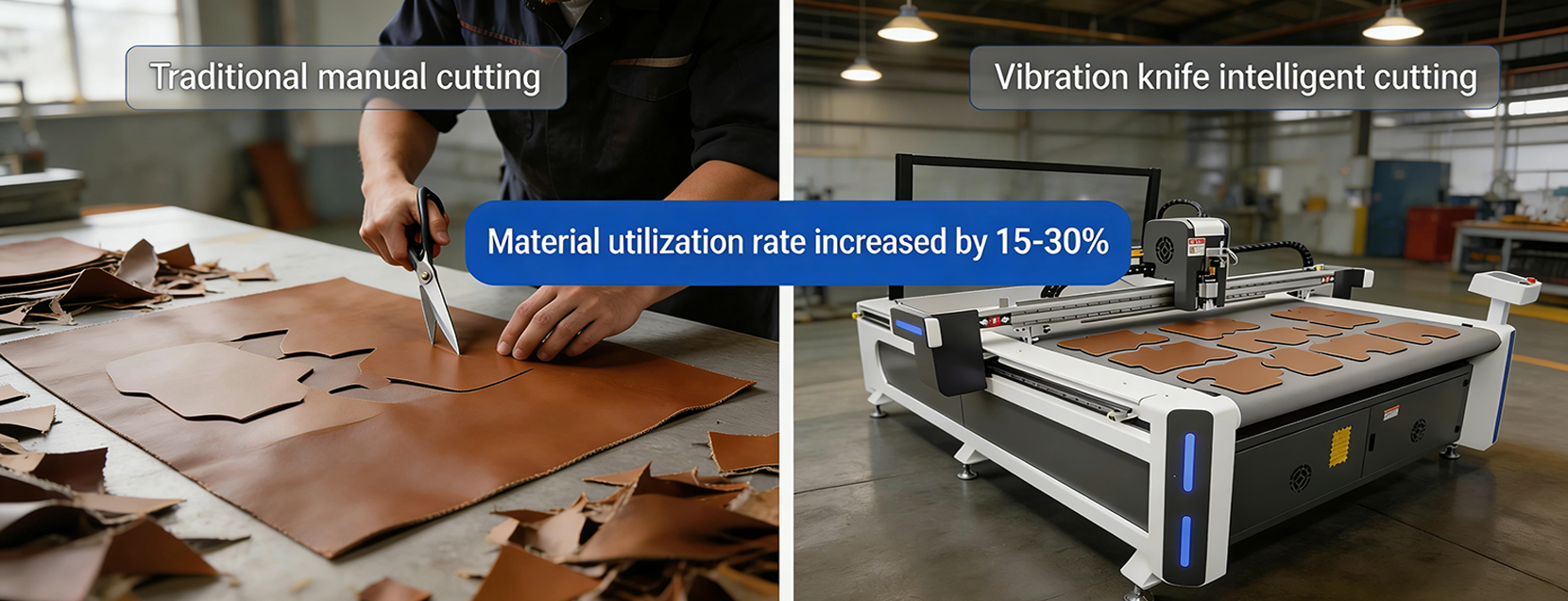
When I first started shopping for a flexible material cutting machine, I made the same mistake many shop owners make. I focused entirely on cutting speed. I wanted to know how many meters per minute the machine could handle, how fast the head moved, and whether it could keep up with my busiest shifts. Speed matters, of course, but after running my REMEYA flexible material cutting machine for the past eight months, I now know that the biggest return on investment doesn’t come from speed. It comes from how much material the machine saves.
If you work with expensive flexible materials—leather, technical fabrics, high-density foam, composites—you already know that raw material is often your single largest cost. A 10% waste reduction can easily save thousands of dollars a month. That’s why I want to share exactly how a flexible material cutting machine saved my shop over 12% in material costs in the first year, and why the savings potential is even higher than most buyers realize.
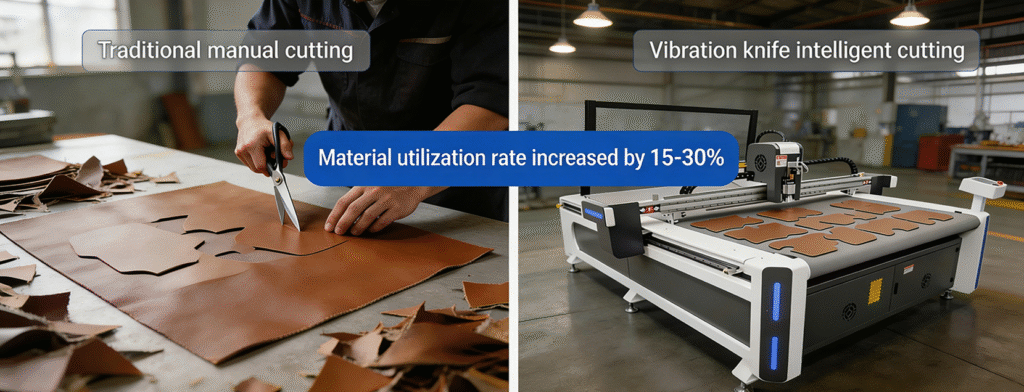
Before buying my REMEYA flexible material cutting machine, I believed my manual cutting team was already efficient. My senior cutters had decades of experience. They could lay out patterns quickly, avoid defects, and cut tight nests. I assumed a machine would only improve speed, not material usage.
I was wrong. What I didn’t understand is that even the most skilled hand cutter is limited by human perception and time. Hand cutters leave safety margins between parts because they can’t risk overlapping. They tend to avoid irregular edges of a material roll or hide. And when a material has defects—scars in leather, creases in fabric, soft spots in foam—a human operator often cuts around them conservatively, wasting otherwise usable area.
A modern flexible material cutting machine doesn’t have those limitations. It uses intelligent nesting software that considers the shape of each part, the grain direction, the material’s irregularities, and the need to avoid defects—all simultaneously. The result is a nest that is consistently tighter than what a human can achieve, day after day.
In my upholstery and soft goods shop, we cut a mix of genuine leather, synthetic leather, foam, and technical textiles. Before the REMEYA flexible material cutting machine, our material utilization rate varied wildly depending on who was cutting and how complex the order was. On average, we were wasting about 18% of our raw material.
After switching to automated nesting and vibration cutting, our utilization improved by roughly 12–14%. That may not sound dramatic, but let me put it in dollar terms.
We spend about $18,000 per month on leather and high-end fabrics alone. A 12% reduction in waste means we now use material that used to be thrown away. That’s over $2,000 saved every month. Over a year, that’s $24,000—more than enough to cover a significant portion of the machine’s cost. And because the machine also cuts faster and with fewer errors, labor costs dropped as well.
When people ask me about my REMEYA flexible material cutting machine, I tell them the hardware is great, but the software is what pays for itself. The nesting system doesn’t just pack parts together—it intelligently assigns part priority.
For example, in leather cutting, the software allows me to mark defects manually or automatically. It then nests high-visibility parts (like sofa arm fronts) in the best areas of the hide, while lower-visibility parts (like internal supports) are placed around scars or grain variations. This “graded zoning” feature alone increased our yield on premium leather by nearly 15%.
The same principle applies to foam and fabric. With foam, the machine adjusts cutting paths to avoid compression marks and preserves the natural cell structure of the material. With fabric, the vibration knife cuts cleanly without fraying, so edges don’t need extra seam allowance, which further reduces waste.
Another hidden source of material waste is rework. When a part is cut incorrectly by hand—wrong size, wrong angle, or damaged during handling—it often has to be recut from fresh material. With a flexible material cutting machine, every cut is identical. The machine follows the digital pattern exactly, every time. That consistency eliminated nearly all of our cutting-related rework.
For my shop, that meant fewer rush orders for replacement material and less inventory tied up in safety stock. It also improved our reputation with clients, because we stopped having minor mismatches in paired pieces (like left and right sofa cushions).
If you’re evaluating whether a flexible material cutting machine makes sense for your business, I recommend looking at three numbers:
In my case, the machine paid for itself in less than 14 months, driven primarily by material savings rather than labor reduction. And because the REMEYA flexible material cutting machine handles such a wide range of materials—leather, foam, technical fabrics, composites—I was able to consolidate multiple manual cutting stations into one automated cell, freeing up floor space and reducing inventory of half-used rolls.
I made the mistake of initially comparing machines by cutting speed and price. I’m glad I slowed down and dug into the real economics. The true value of a flexible material cutting machine lies in how much material it saves, how consistent it makes your output, and how quickly it lowers your cost per part.
If your shop cuts expensive flexible materials, I encourage you to look beyond the marketing specs. Ask about nesting software, defect handling, and graded zoning. Ask for a test cut with your own materials. When I did that with REMEYA, the material savings were clear from the first test.
The machine isn’t just a tool—it’s a way to stop throwing money into the scrap bin.
Whenever I used to cut fiberglass insulation boards, mineral wool, or composite panels with a handheld angle grinder or a
As manufacturers strive for higher precision, faster production speeds, and lower labor costs, the leather processing industry is experiencing rapid
In my years of running a workshop that handles everything from carbon fiber sheets to multi‑layer automotive foams, I’ve learned
Many shop owners who invest in a high‑end CNC oscillating knife cutting machine(also called flexible material cutting machine) often face